British piano guide
English upright and grand pianos
Britain produced a wide range of pianos, from compact twentieth-century uprights to substantial Victorian grands. Maker, age and appearance are useful starting points, but condition and preparation determine whether an individual instrument is worth owning.
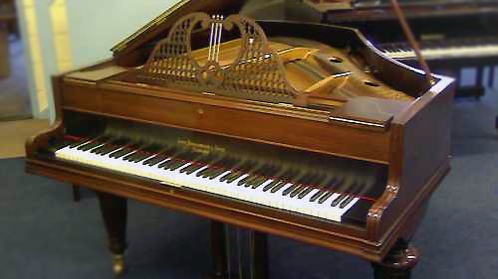
Start with the maker, then assess the piano
Recognised English names include Broadwood, Chappell, Challen, Rogers, Knight, Welmar and Kemble. Quality varied within many factories and across different periods, so a respected badge does not remove the need for a technical inspection.
Structure
Check the wrest plank, tuning pins, soundboard, bridges and frame. Some early instruments have construction that is less suited to modern pitch or centrally heated rooms.
Action
Hammer wear, loose centres, tired felts and regulation problems can change both touch and tone. Repair scope should be established before purchase.
Stability
Older soundboards and pinblocks may have dried or moved. Confirm that the piano can hold an appropriate pitch and remains stable after tuning.
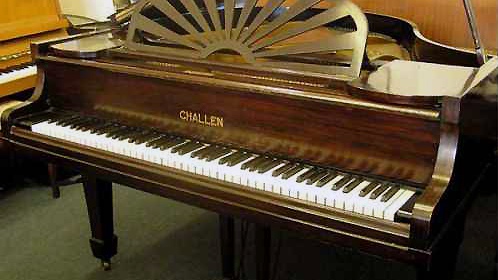
English grand and baby grand pianos
Challen baby grands are among the most frequently encountered British grands, commonly measuring from about 4ft 4in to 5ft. Their quality and condition vary. Some compact examples use a simplex action, which should be checked carefully for wear.
Broadwood, Rogers, Chappell, Cramer and Steck also produced noteworthy grands. Some Broadwood and Chappell instruments from around the turn of the twentieth century can be musically rewarding when their structure and action remain sound or have been properly restored.
Traditional English uprights
Broadwood, Chappell, Challen, Steck and Welmar are common names among traditional British uprights. Cabinet quality can be appealing, but age-related wear may be substantial. Ask a tuner or technician to assess pitch stability, action wear and the likely repair budget before buying privately.
Early instruments
Some nineteenth-century pianos lack the full iron-frame construction expected in later instruments. They may suit a specialist musical or historic purpose, but should not be assumed suitable for modern domestic use without expert advice.
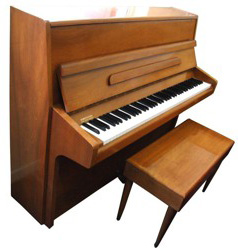
Modern British uprights
Knight is particularly well regarded for stable, compact uprights with a clear and musical tone. Welmar also produced many good instruments, although specification and quality vary by period. Kemble made several practical small uprights, including compact 85-note models.
As with every used piano, judge the individual instrument rather than buying by reputation alone.
Repair-cost note
Older versions of this guide quoted repair prices from 2013. Those figures are historical and should not be used for current budgeting. Restringing, pinblock work, action reconditioning and polishing vary considerably by instrument and required standard.
Explore British piano makers
Our wider maker directory includes English and international names, with guidance on which badges are commonly encountered and what to inspect.
Considering an English piano?
Send the maker, model, serial number and photographs, or arrange to compare prepared instruments in Oxford.